Teaching a Casino Scene Through Film or Prose
Compare a casino scene in film and prose to plan a focused lesson on viewpoint, dialogue and omission, helping trainee teachers choose a form that fits.

A trainee teacher places a printed scene beside a laptop showing a short casino exchange. The film offers actors’ voices, gestures and framing; the prose offers sentences that learners can return to. For students at Trường Đại học Sư phạm TP. Hồ Chí Minh, the contrast can make a focused lesson in how storytelling forms organise a scene.
The useful question is not which medium is better. It is how each one arranges attention: whose experience comes forward, how dialogue is shaped, and what the audience must work out from the form itself.
Choose versions that share a dramatic question
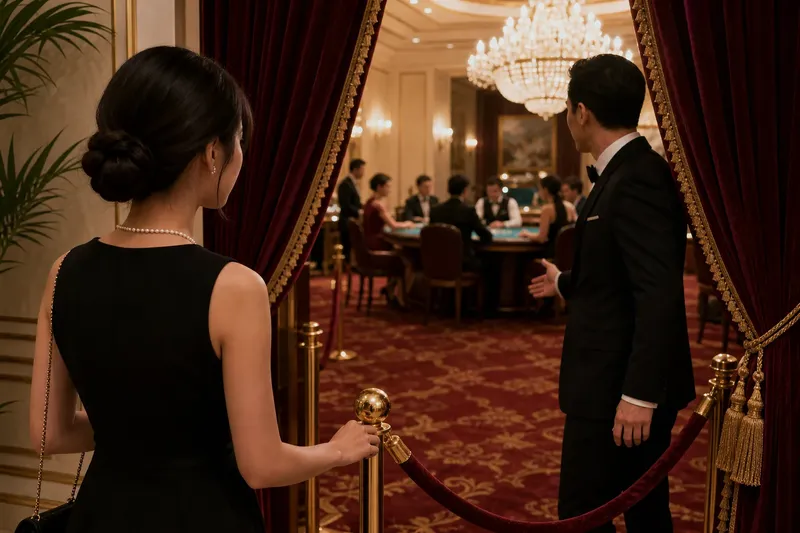
Start with a shared situation, not a demand that film and prose match line by line. One scene might show a visitor asking a companion to leave a casino lounge. In the film, the companion may answer aloud; in the prose, the narrator may describe a pause before the reply.
That contrast gives learners something specific to discuss. They can consider how a spoken line, a pause or a narrator’s choice shapes the scene’s pace and emphasis. If the versions have different characters or outcomes, narrow the comparison to a shared element, such as the request to leave.
Before class, list the features each source offers. Film may use dialogue, performance, costume, setting and camera position. Prose may use point of view, word choice, sentence structure and the order in which details appear.
Give film and prose different reading tasks
For film, invite learners to attend to the relationship between speech and performance. They might note where a pause falls, whether a speaker faces another character, or how the camera positions people in the room. The task is to describe how those choices direct attention, rather than to decide what a character secretly feels.
For prose, ask learners to trace how the passage controls pace and access to the scene. They can mark a sentence that slows an exchange, a shift in narrator or a description that places one character in the foreground. These features can be discussed as choices in composition, not as clues to a single hidden answer.
It is not worth the effort to catalogue every object in a casino set or annotate every sentence. A few carefully selected features leave more room to explain how the form shapes the reader’s or viewer’s experience.
Compare viewpoint, pacing and scene construction
Point of view is the position from which a story presents events. A film can place the camera close to one character or show the group from a distance. Prose can stay with one character’s perceptions, move between viewpoints or keep the narrator outside the characters’ thoughts.
Pacing also differs. A film can hold on a reaction, cut to another person or move quickly through an exchange. Prose can slow time with description or compress a conversation into a brief account. Ask learners how these formal choices organise attention and sequence.
Dialogue provides another useful point of comparison. Actors shape a line through timing, emphasis and movement; prose presents dialogue through wording, punctuation and surrounding narration. A line may therefore feel different in each version without either one being the definitive account.
Casino settings may call up ideas about risk, status or escape, but those associations are not universal. Keep discussion tied to particular choices in the material: the arrangement of the lounge, the language used to describe it, or the way characters move through it.
Plan a comparison with a clear classroom outcome
Say a lecturer is preparing a seminar for trainee English teachers. The starting materials are an invented film clip of twelve seconds, showing a visitor ask a companion to leave a casino lounge, and an invented prose passage of six sentences about the same exchange. The lecturer wants students to compare how each form controls the pace of the request.
Show the clip once without pausing. Learners write down the sequence they notice: request, pause and reply.
Show it again and ask learners to mark where the camera holds, cuts or changes position. They record one choice that affects the pace of the exchange.
Distribute the six-sentence passage. Learners number the sentences in reading order and mark where the prose spends the most attention.
In pairs, compare the film’s timing with the prose’s sentence sequence. Each pair chooses one formal choice from each version and explains how it organises the scene.
Collect a brief written response that names the two choices and describes one difference in pacing. This gives the lecturer a concrete indication of whether learners can compare form rather than merely retell the event.
In this invented seminar, learners note that the film holds on the companion before the reply, while the prose devotes two of its six sentences to the request and its immediate aftermath. They decide that the film makes the pause a distinct moment, whereas the prose gives more space to the exchange’s wording. Their answer compares construction without claiming that either version reveals a character’s private motive.
Which form fits the lesson’s purpose?
What can film show that prose may organise differently?
Film places performance, setting and camera position in view at the same time. Learners can discuss how these elements arrange a scene, while remembering that a visible action does not supply a full account of a character’s thoughts.
How can prose shape the pace of a scene?
Sentence length, description and the order of information can slow or compress an exchange. Learners can mark where the passage lingers and compare that placement with the film’s editing or held shots.
Should both forms appear in one lesson?
Use both when comparison is part of the learning aim and the versions share a clear dramatic question. If time is limited or the versions differ substantially, focus on one form and set a task that fits its features.
What makes a useful comparison prompt?
A useful prompt names a formal feature, such as camera position, sentence order or dialogue timing. It asks learners to explain what that choice does to the scene’s presentation, rather than to settle on one interpretation of a character.
Check the materials before planning the activity
Use these checks to decide whether to proceed, adapt the task or choose different material:
Observe whether both versions centre on the same dramatic decision; if they do, compare how each organises it, and if they do not, select a closer passage or clip.
Observe whether the film’s dialogue is audible; if it is, include timing and delivery in the task, and if it is not, focus on camera position and scene arrangement or choose a clearer clip.
Observe whether the prose has a noticeable shift in sentence pace or detail; if it does, ask learners to trace that sequence, and if it does not, choose a passage with a more useful formal contrast.
Observe whether the film’s framing or editing is relevant to the lesson question; if it is, ask learners to describe one choice, and if it is not, revise the question or select a more suitable scene.
Observe whether the casino setting distracts from the formal task; if it does not, keep the scene, and if it does, use a less prominent setting or a shorter extract.
Observe whether the lesson allows time for individual notes and paired comparison; if it does, use both forms, and if it does not, shorten the materials or make one form the focus.
Observe whether institutional guidance permits use of the selected material; if the guidance is clear, prepare the activity, and if it is unclear, consult the appropriate guidance or choose another resource.
Teaching a casino scene through film or prose works best when the task follows the form: film can make framing and performance available for discussion, while prose can make sentence order and narration easier to revisit. Naming that difference helps trainee teachers plan a comparison with a clear purpose.
When choosing another scene, begin by writing the classroom question in a single sentence. Then select the material that gives learners the clearest formal choices to examine, and let the other version wait for a lesson where its particular strengths matter.